
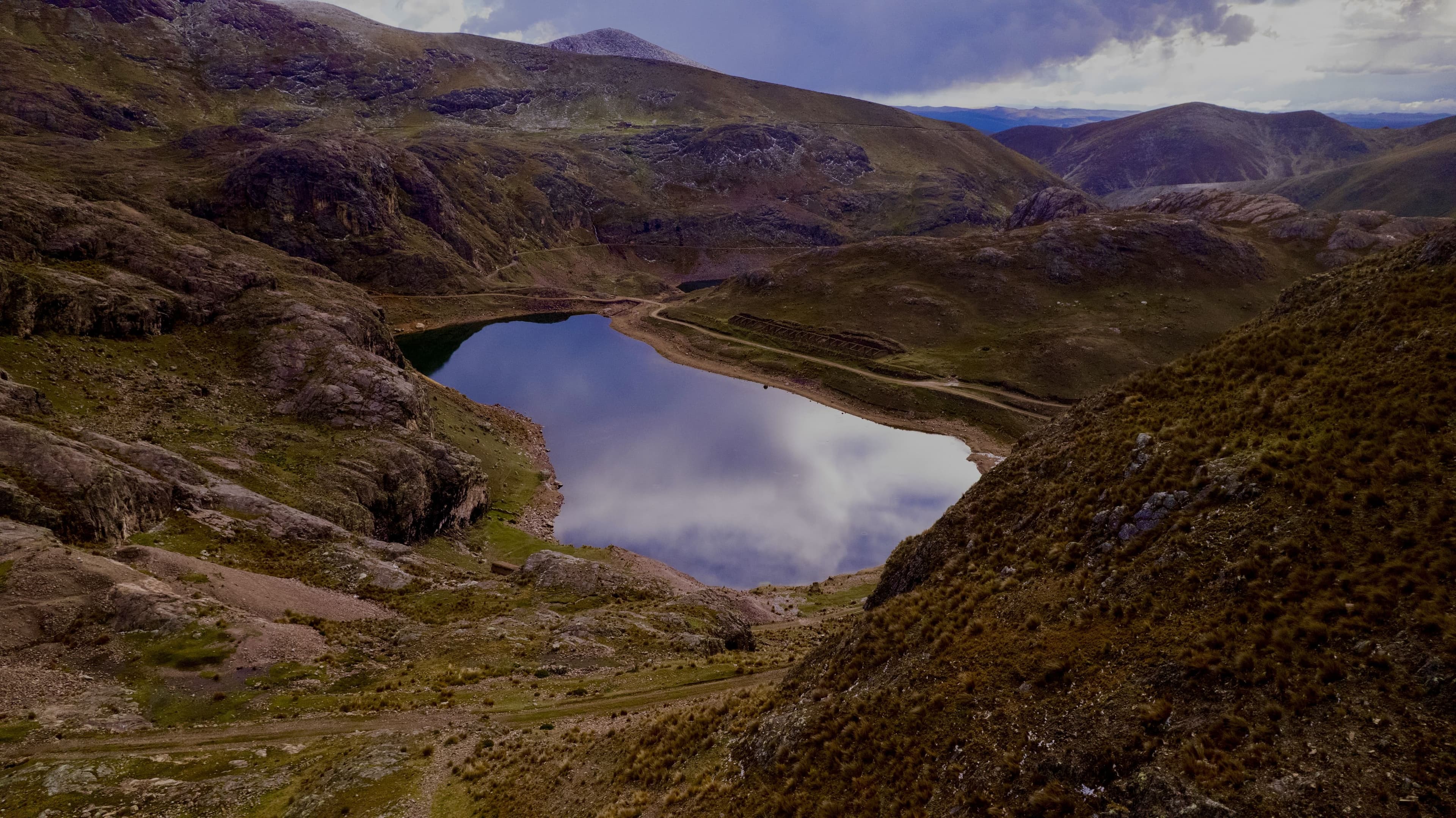
Madre Sierra
Madre Sierra is a high-grade, past-producing underground silver mine with a long operating history and substantial prior investment. Mining activity most recently occurred between 2019 and 2021 under a pilot-scale operation.
Portfolio
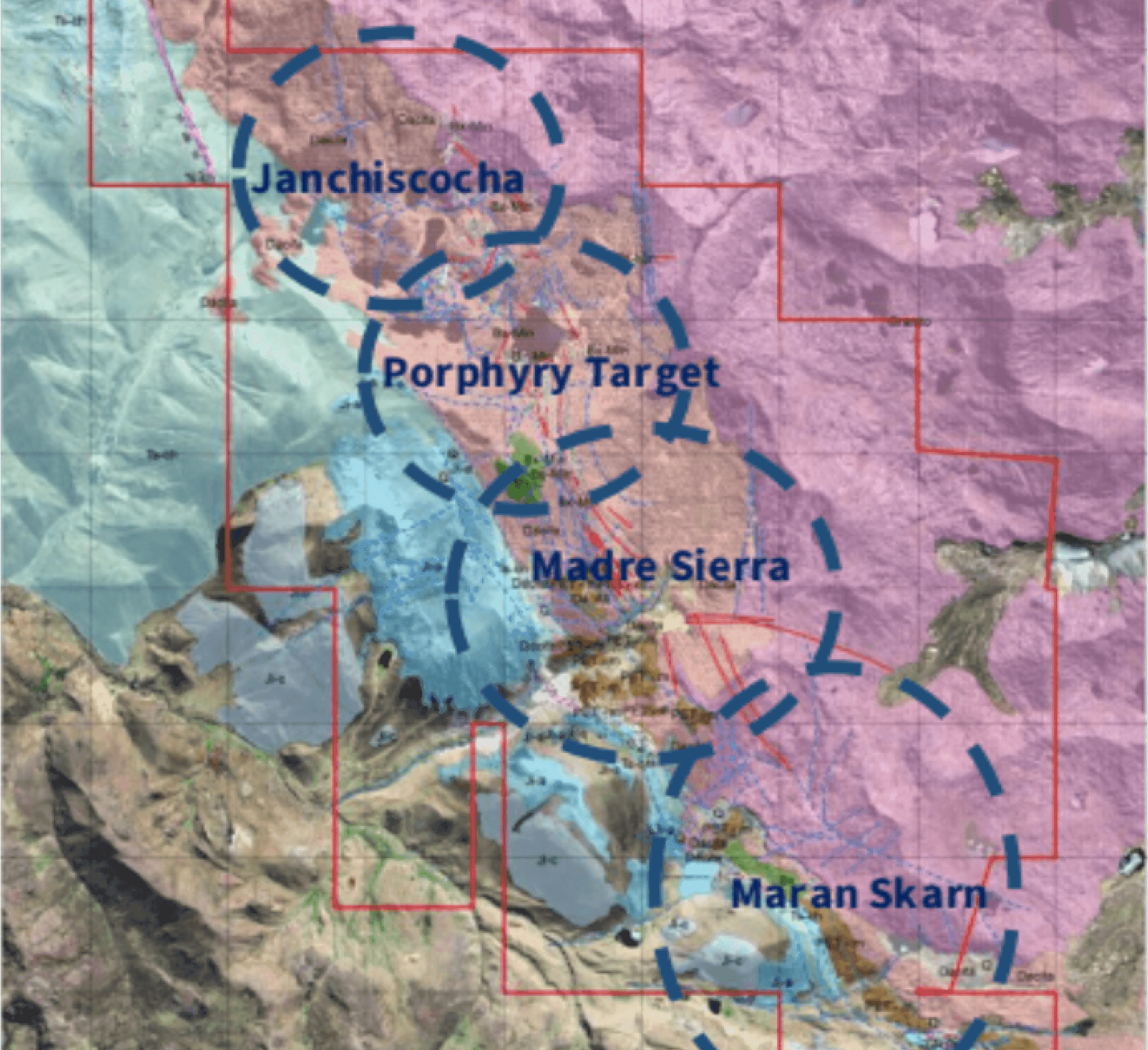
A Focused Portfolio in Central Peru
Titiminas Silver controls a consolidated land package in the Junín region of central Peru, encompassing four distinct mineralized systems. The portfolio is anchored by a permitted, past-producing silver mine and supported by polymetallic and porphyry-scale exploration opportunities within the same property boundary.
Location Overview
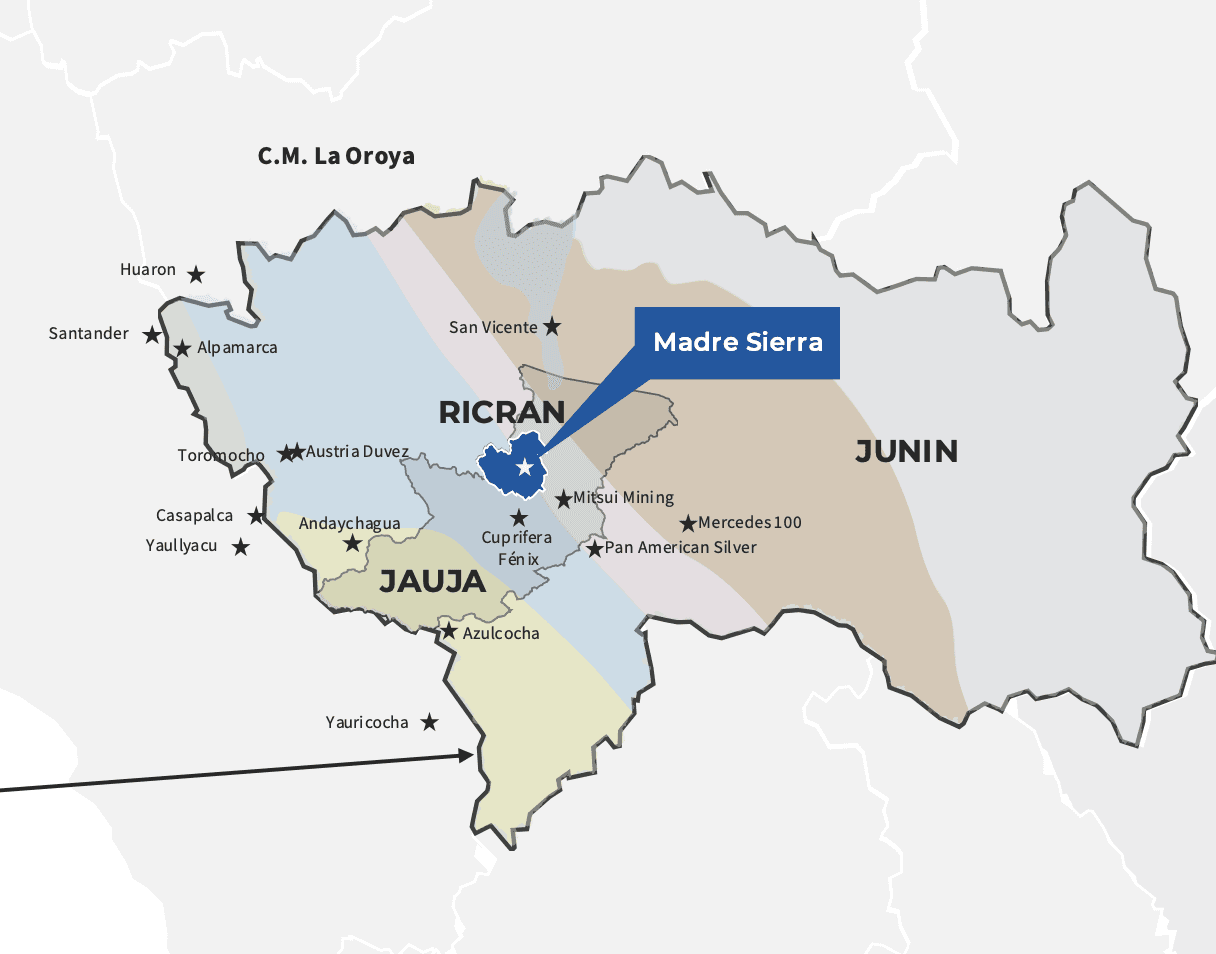
Strategically positioned in Junín
- Location
- Ricran district, Jauja province, Region of Junin, Peru
- Area
- +7,500ha in 13 concessions
- Altitude
- 4,100–4,700 m.a.s.l.
- Access
- 270 km from Lima
Geology
Geological Features
Mineralization & Corridor Setting
Mineralization occurs in a grey, yellowish, and pink dacitic stock with moderate argilization, strong silicification, and marginal moderate chloritization and weak epidotization. The N 25° W–oriented corridor extends 3,250 m by 250 m from Cuchimachay Lagoon to Titiminas workings, characterized by brecciated textures and multiple milky, crystalline, and boxwork quartz veins hosting primary sulfides.
Structural Controls & Mineralization
Two major NW–SE faults control mineralization, forming sigmoidal and step-like veins. Quartz veins host copper oxides (malachite, chrysocolla, cuprite), sulfides (molybdenite, chalcopyrite, bornite), plus argentiferous galena, sphalerite, and grey coppers.
Hydrothermal Breccias & Exploration Potential
Hydrothermal breccias with open-space fillings, complex mineralogy, and high Ag, Pb, and Zn concentrations indicate multiple mineralization episodes and highlight strong exploration potential, making the corridor a prime target for future development.
Zonation & Mineralization
Vertically zoned mineralization
Lower Zone
(Cuchimachay border)
Cu-Mo (Au-Ag)
Intermediate Zone
(Veins A, B, C, D)
Ag-Cu (Au)
Upper Zone
(Veins Ana, Linda, Shirley)
Ag-Pb-Zn
Existing Infrastructure
Established underground access, power supply, processing facilities, and site infrastructure provide a strong operational foundation, reducing development risk and accelerating the pathway to production.
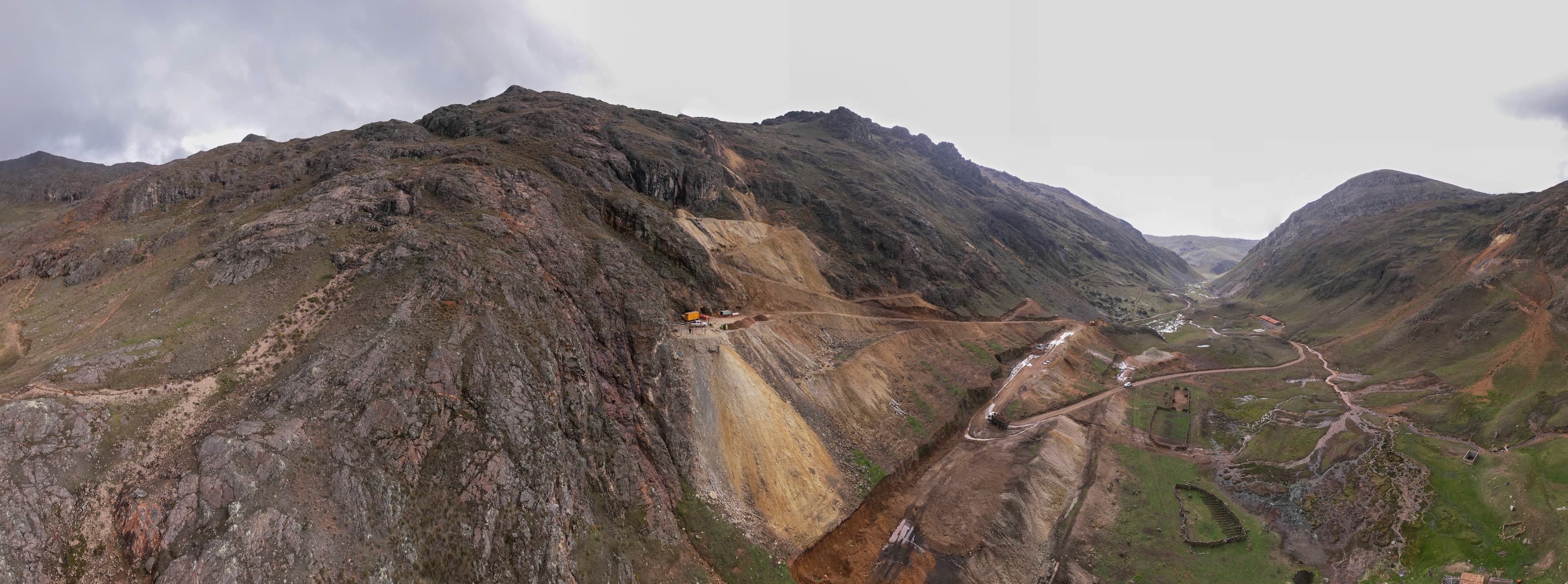
Entrance Control & Access Route 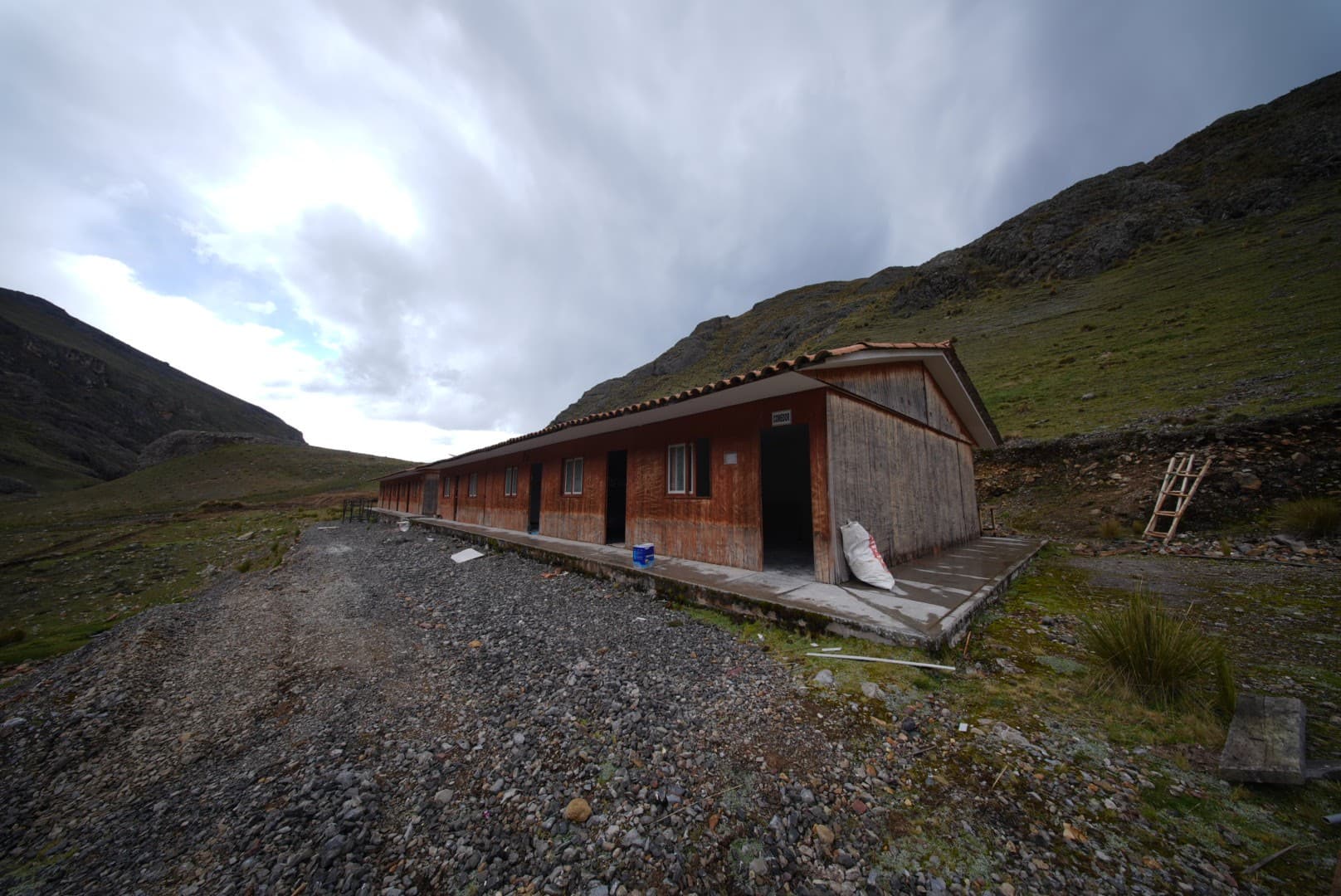
80 person camp 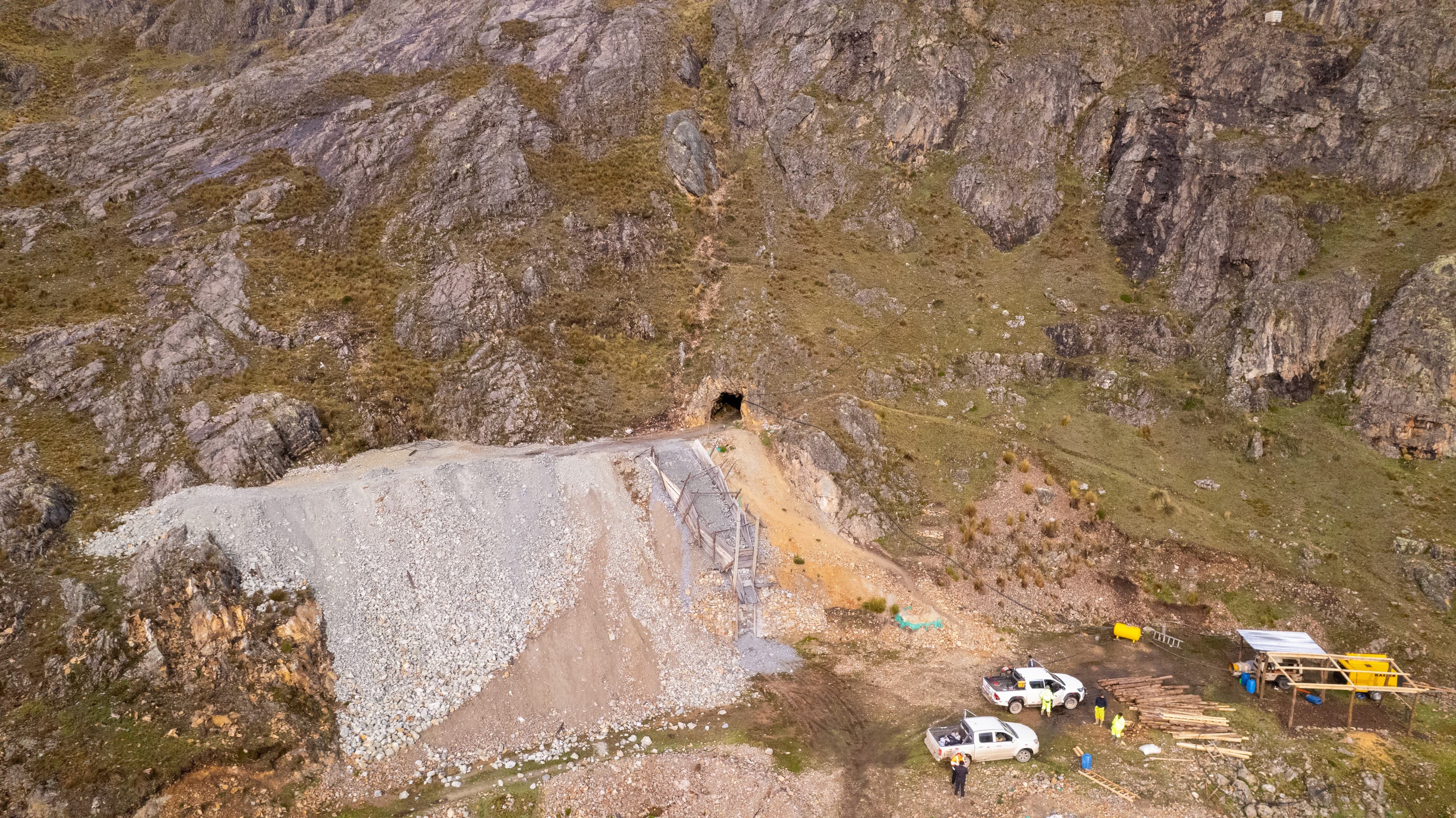
Mineral Hopper & Sedimentation Ponds 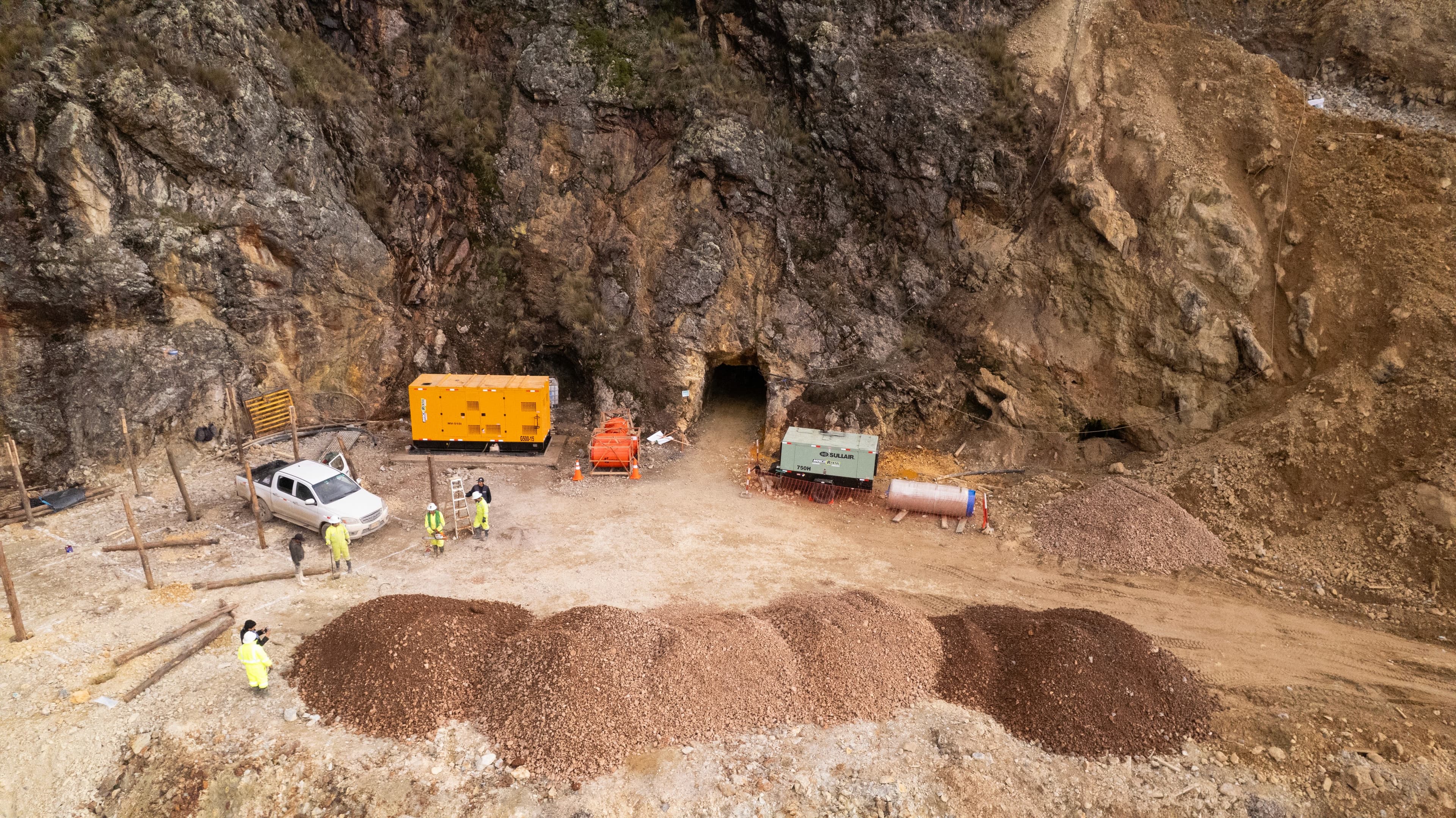
Dismount & cargo maneuvering areas 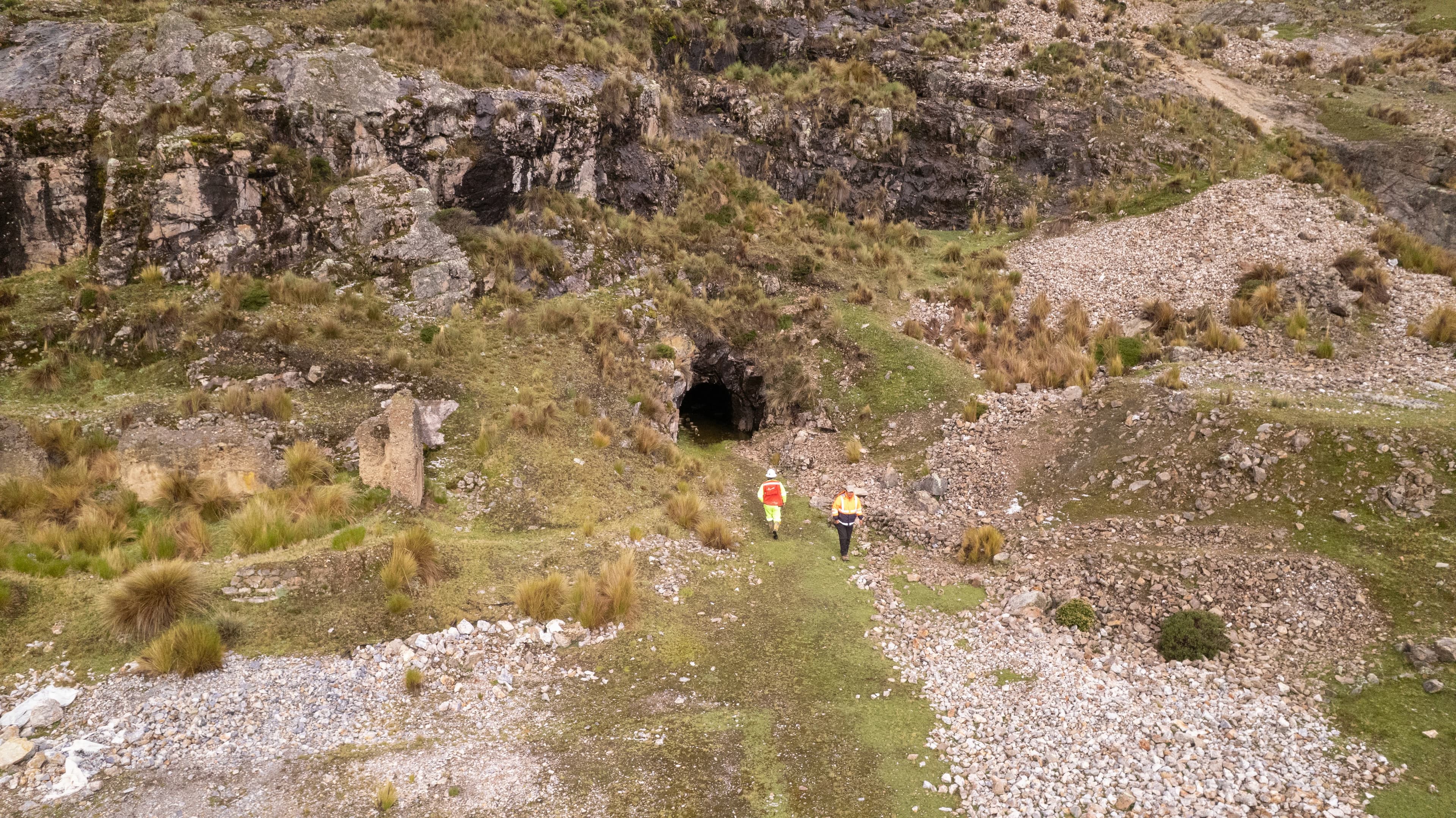
Mine Preparation for explotation
NI 43-101 Technical Report
Independent technical disclosure
Access the independent NI 43-101 technical report supporting the development of the Madre Sierra Project.
Adjacent Asset
Janchiscocha Molybdenum Mine
Janchiscocha is a past-producing molybdenum mine that operated from the late 19th century until the mid-20th century. Historical records indicate grades ranging from 0.7% to 1.5% molybdenum. The project is located within the same land package as Madre Sierra and represents a rehabilitable underground system with significant remaining exploration potential.
Mineralization & Geological Controls
Mineralization Style & Systems
Mineralization is found in two forms: vein deposits (Mo, Mo-Cu, Cu-Au-Pb-Zn) and disseminated bodies (Mo-Cu and Au-Cu-Mo), representing multiple mineralizing events and styles. The area presents multiple structural systems (NW–SE, NE–SW, EW), generating stratification planes, diaclases, local faults, and fractures that acted as conduits for mineralizing fluids, significantly altering the mineralogical composition of the host rock.
Alteration & Hydrothermal Processes
Feldspar phenocrystals were altered to sericite and quartz, with intense argillic alteration dominating the breccias and dome zones. Moving outward, alteration transitions into moderate argillic alteration, propylitic alteration, and strong silicification, closely associated with hydrothermal breccias and adjacent intrusive bodies.
Intrusive Architecture & Host Controls
The Dacitic Dome, part of a hypabyssal phase, exhibits a light grey to whitish color with a porphyritic texture, representing a key intrusive control on mineralization. It is hosted within granitic, adamellitic, and tonalitic intrusives, forming a circular aureole approximately 950 meters in diameter, which defines the primary mineralized footprint of the system.